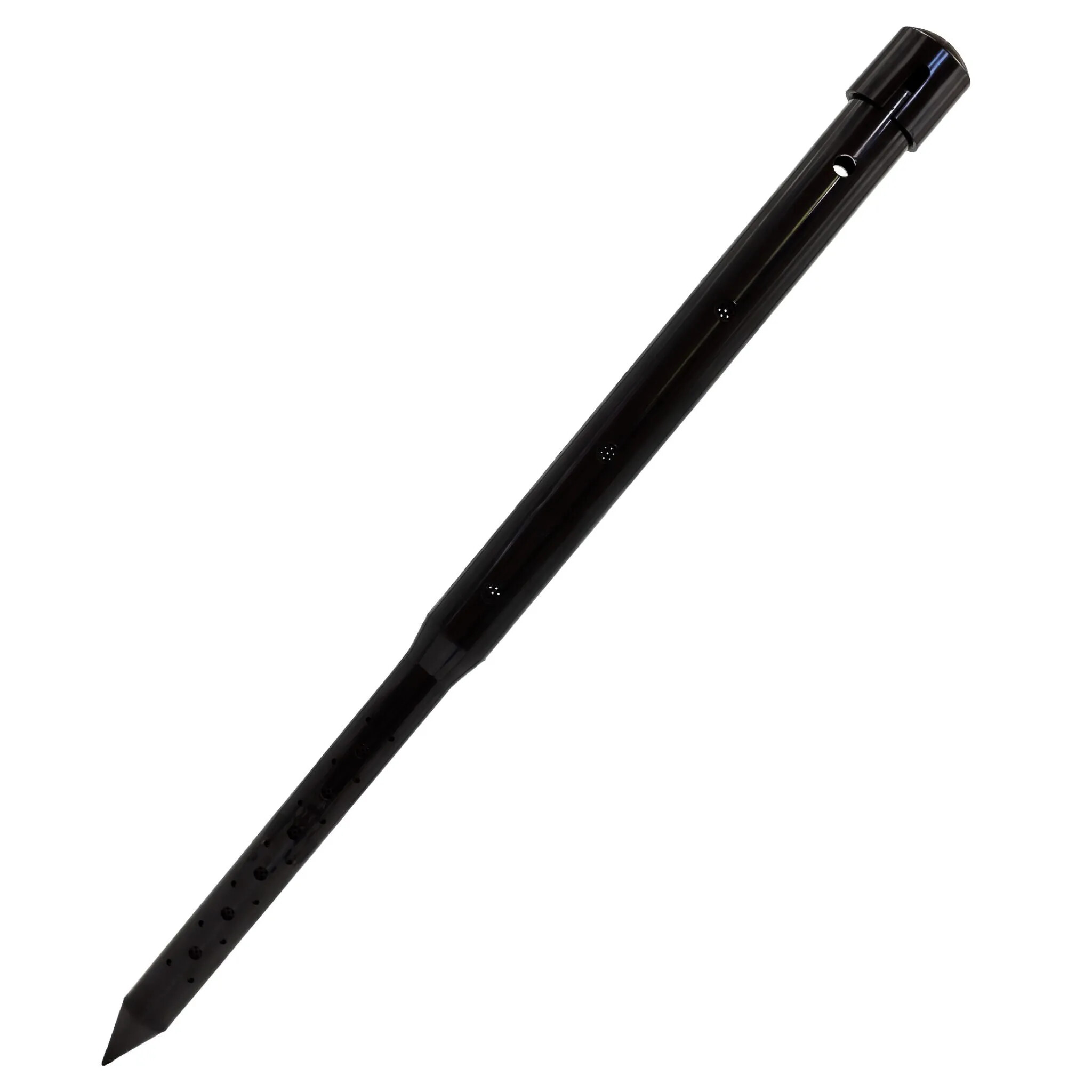
My yard previously was doing amazing, but with the higher prices of water in my area, I’m doing what I can to promote healthier trees using less water. Curious if anyone has thoughts on how these might require tweaking some settings on my zones? I have the 24” version for all my existing large trees and palms (fruitless olive and pineapple palms), as well as newly planted large trees (majestic ash, Red Push, and Southern Live Oak). My smaller ornamental trees (ebony flame crape myrtle, Vitex, and Laurel columns) I have the shorter 14” version. I redid my whole irrigation system (old system was 25 years old, and I was tired of chasing leaks in the poly tubing) so each tree has a PVC line running to it with a 4 port drip manifold, and varying sizes of emitters plumbed into these stakes. Bigger trees have 4 5gph emitters, smaller ornamental have 4 2gph. The stakes seem to be working well feeding the lower roots, while overflow comes out an opening in the top of the stakes to water the top surface and the feeder roots. As of now, I’m watering on a fixed schedule every couple days as there are A LOT of new trees planted and pushing them through the transplant shock phase. After a few weeks I intend to throw it back on Flex Daily but I can’t decide if the addition of the drip stakes will require some changes…
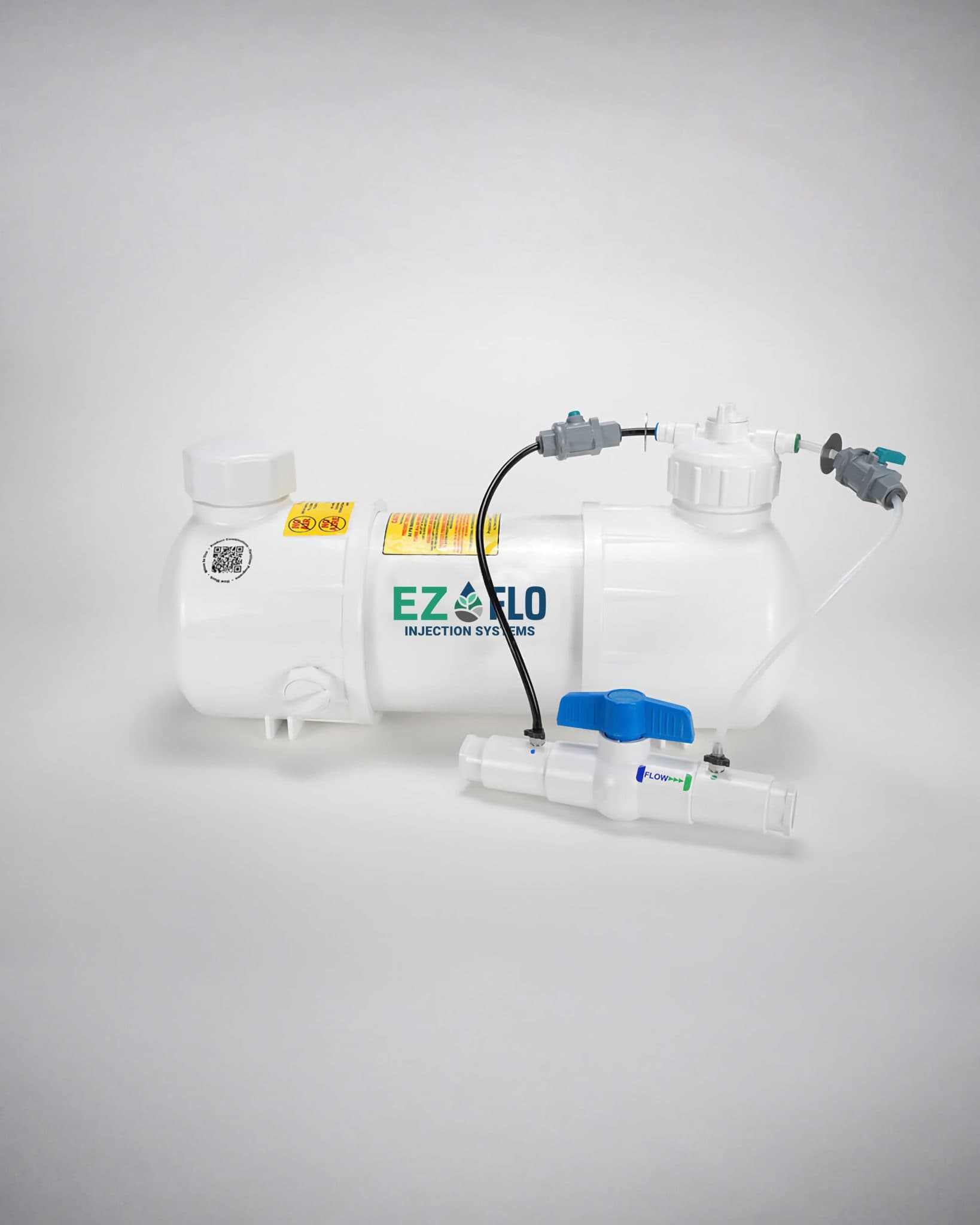
Oh, did I mention my in line fertilization system is working beautifully?!
You have a fertigation system?! I’ve been very curious about those, but never talked to anyone who had one. What products are you using with it (and do you have any problems with them not dissolving/blocking lines/heads??
Is the system in-line to all of your lines or just certain head types?
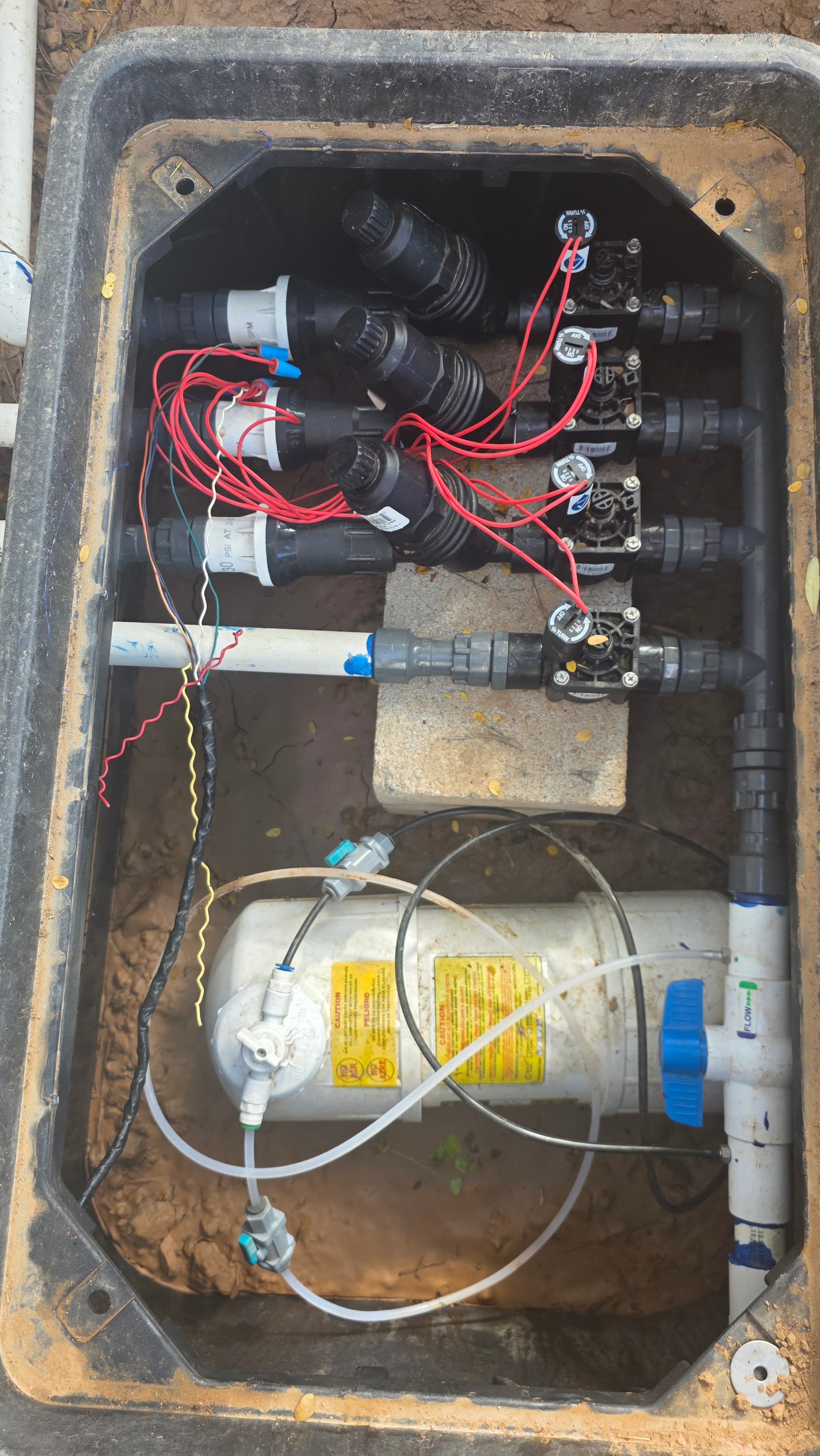
I have it plumbed into the 1” mainline feeding the valve box to my backyard. When I get adventurous, I plan to run one to my front yard valve box. This currently feeds my backyard trees and shrubs, and I have a third drip zone that I plan to redo the drip for my fruit trees and separate them from my standard front yard “tree" zone since they really have such different watering needs. Also, 1 single grass zone off to the side (we are doing artificial turf in the backyard) for a future small grass spot for one of our little pets.
Currently, I’ve only been running a product from a local nursery called Moon Juice. It’s too hot here to fertilize, but this is a root growth stimulant. Once it starts to cool down, I’ll throw some kind of general fertilizer in there to help out the newly planted things.
It does require either liquid fertilizer or you need to completely dissolve powders/granular fertilizer prior to putting into the unit. This system is pretty basic and only has “Hi/Low" adjustments, so I can’t dial in dosage, but it’s micro dosing every time it waters, so I’m not worried about over doing the fertilizer. Claims that it can last 6+ weeks without refilling depending on water flow. I’ve only had it operational for a month now, and so far ao good…I have cleaned up my valve box a bit since I first got everything installed, but here is what it looks like.
That’s awesome! I’ve been intrigued by the idea of one of these systems because I’ve got sandy hollis soil that doesn’t hold nutrients (or water) particularly well. I tried slow-release granular products this year and they did ok, but I’m reading that continuous micro-dosing may be more effective, thus my interest.
Is your plan to stay with stimulants/fertilizers, or are you potentially thinking about herbicide application as well?
Hi @tmcgahey … that’s great you’re doing your part to reduce water usage. I have a similar spike for deep watering but mine has a perforated cap at the top to take in excess surface water like when we get a heavy rain, typically after I’ve washed my car.
It’s just fine to irrigate through the spike but you should also have drip emitters at the surface. Emitter count and flow rate are important but grouping your trees by water usage plays a bigger role towards efficiency. For example, Laurel and Crape Myrtle are high water users and should be on the same valve while Ash, Olive and Pistace are medium to low water users and ideally grouped together. Your Oak and vitex are low water using once established. For any of your trees adjacent to your lawn, you can very likely eliminate supplemental drip irrigation once they are established.
I’m not a fan of inline fertilizers for residential properties. Your plants need more water in order to process fertilizers. So adding fertilizers to the mix is working against your conservation goals. Unless you’re harvesting crops, you don’t need your plants to grow; you want them to stay green. When you do need to fertilize, you’re better off with a watering can so you can monitor application. And honestly we’re talking once a year, if at all.
I know lawn can be a challenge in the desert but that’s another area I would reduce or eliminate fertilizers, especially if your turtle buddy is chomping on the grass. When I had a lawn, I rarely fertilized it. I used a reel mower and let the clippings call back into the grass.
For improved water conservation, you’re better off focusing on soil health. Commercial fertilizers are often harmful to the insects, microbes and other critters that make up a healthy soil biome. Instead transition to natural mulches and yard clippings. When you have a healthy biome, the soil becomes better aerated increasing the ability of the soil to take in more water. You’ll have healthier roots and happier trees.
I’m in Southern Nevada. My mesquite and Texas Mountain Laurels have not been watered in five years. I have a Bookleaf Mallee that does not have any irrigation and is growing like a champ. It can be done!
I hope that helps. Good luck with your conservation goals!
If your area has hard water, you’re more likely to have clogged emitters than clogged lines and that’s before you add fertilizers into the mix. Save your money.
I’m good. Been dealing with AZ water for 42 years. I can get 10+ years out of the Rainbird button emitters before they start to give me issues. I’ll keep an eye on them to see if the fertigation system is affecting them negatively.